Tiered Quality in Localization: a Relational Dead End

We've reached a strange point in localization, where we're treating translation quality like a temperature on a thermostat.
The logic goes like this: if it’s a $200M blockbuster, we crank the quality to "Excellent." If it’s a reality TV spin-off or a niche documentary, "OK" is good enough. It's called "Tiered Quality."
On a spreadsheet, it looks like optimization. In reality, it’s a self-fulfilling prophecy of doomed material that ignores the most important asset a studio has: the expertise of the human at the end of the wire. And it erodes your audience trust.
The Myth of the Predictable Hit
The industry’s current obsession with tiering assumes you have a crystal ball. Execs act as if they can predict which content deserves an "investment in expertise" and which doesn't.
But history tells a different story. The "Blair Witch Projects" of the world—the shoestring-budget outliers—weren't supposed to be hits. If we had applied "Tier 3" logic to those films, their global potential could have been harmed or potetially strangled in the cradle.
When you decide a theoretically niche movie, show or game only deserves a "light post-edit" because it’s "just a minor thing," you aren't saving a few cents per word. You are betting against your own content. You are ensuring that it cannot become a breakout hit in a new market because the translation itself becomes a barrier to entry.

A Game Theory approach suggests that it is in a client's best financial interest to invest in high-quality translations for ALL their content. This strategy maximizes the mathematical probability that an unexpected title will become a breakthrough hit in the target market, thereby maximizing potential profits.
This logic holds up if we accept two straightforward, and reasonable, assumptions:
Unknown Upside: We cannot predict which specific piece of content will find massive success in translation (especially when accounting for cultural differences).
Quality as a Vehicle: A piece of content (especially dubbed) can only maximize it's chances of succeed if it is delivered through a competent, engaging adaptation that respects the audience.
It’s also important to remember that excellent translation is relatively inexpensive compared to the immense cost of content acquisition and production. So why risk the entire investment for such a marginal saving?
The Erosion of Audience Trust
But there is a deeper problem with tiering that goes beyond ROI.
As I’ve written before, what truly matters in this industry is the personalized touch and the direct connection to translators. When you introduce "Tier 3" or "OK" quality levels—often powered by machine translation with a quick human "glance"—you're not only lowering the bar for the text, but also breaking the relationship with the expert and endangering the trust of the audience.
Expertise isn't a commodity you can buy in increments of 50%, 75%, or 100%. A professional translator’s greatest value is their advocacy for the content.
But the value of localization to an organization isn't necessarily in what it does. What's really valuable in terms of it's contribution to a wider business is that it thinks about problems in an entirely different, complimentary way by looking at the business through the lens of the audience (customer, the client or the consumer).
So when you tell a translator, "Just make this OK," you are telling them:
We don’t value neither your craft, our audience, nor the creators.
We don’t care about this story's impact.
Don’t bother with the nuance.
This creates a transactional "gig-work" culture where the most talented linguists—the ones who could potentially turn a "B-movie" into a cult classic—eventually leave the pipeline.
"The value of localization to an organization isn't necessarily in what it does. What's really valuable, in terms of it's contribution to a wider business, is that it thinks about problems in an entirely different, complimentary way, by looking at it through the lens of the audience."
The True Cost of Mediocrity
We often hear that very high quality is a "luxury" reserved for the top tier. But in the grand scheme of a studio's budget, the price difference between an "OK" translation and an "Excellent" one is negligible. It’s barely a rounding error on your typical marketing budget.
So, why risk your brand's reputation for such a small, short-shighted and superficial "saving"?
Her'es what you might lose, when you settle for "just good enough":
Brand Continuity: A viewer who sees a "Top Tier" movie on Friday and a "Low Tier" series on Saturday expects the same brand voice. If one is polished and the other is a post-edited mess, the brand feels fractured.
The "Accidental" Hit: You cannot have a sleeper hit if the translation puts the audience to sleep (or even worse — offends it.)
Expert Loyalty: If you want experts (current and future alike) available for your "Tier 1" projects, you have to treat them like experts on every project.
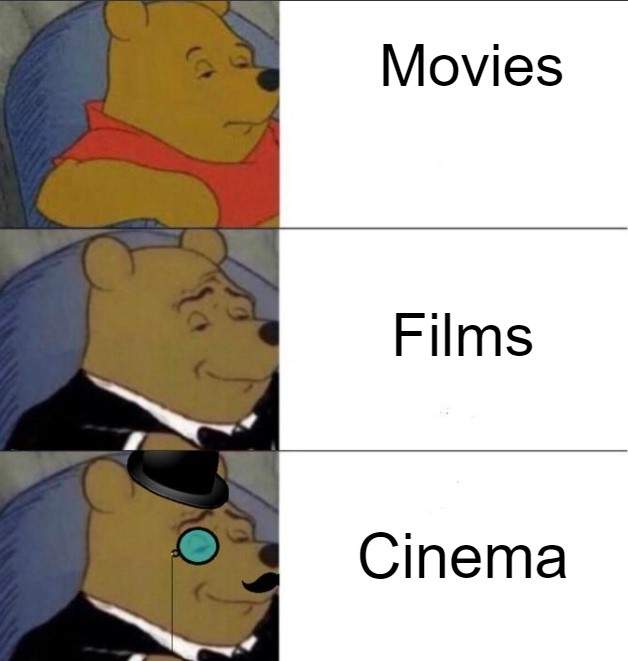
The divide between 'lowbrow' and 'highbrow' entertainment—at least in the context of translation quality—is deeply frustrating. Beyond the fact that it carries a distinct whiff of classism, why should viewers of lower budget production (independent games and movies, reality shows or soap operas) be denied the right to experience correct, professional language version? For many, these titles are their primary media touchpoints; they are the very entry ways that shape our cultural and linguistic experience.
Feeding these audiences lightly post-edited machine translation isn't just patronizing—it actively widens the cultural divide.
The common argument for lowering the bar is that the 'average' viewer won't notice or simply doesn't care. But if that’s truly the case, why bother differentiating quality levels at all? If quality doesn't matter to the audience, then everything should be 'mediocre quality'—a cheap post-edit across the board—because anything more would be a waste of money. Yet, these same companies continue to insist on top-tier quality for their 'prestige' projects. Clearly, even in their eyes, quality carries a value that a spreadsheet can't fully capture.
"If quality doesn't matter, every localization should be mediocre. Yet companies still insist on top-tier quality for 'prestige' projects. Clearly, even in their eyes, quality carries a value that a spreadsheet can’t fully capture."
Beyond the Tiers
It’s time to move beyond the idea that quality is a dial. You should be building workflows that prioritize foundational relationships across the board, both with your audience and with translators who act as a bridge.
If a piece of content is worth buying or producing in the first place, it is worth translating with care too. You shouldn't be asking how much quality you can "afford" to lose, but how you can empower your translators to make every piece of content the best version of itself. The difference in cost is minimal, and it's outweighed by the maximization of your potential gains.
After all, in an industry built on storytelling, "OK" is just another word for "forgettable."