Witcher, or Portrayal of Baboon: How Sapkowski's voice got lost in translation
Voice Vanished
Sapkowski has a wonderful mastery of Polish language that shines through the original works. His sentences are precise and rhythmic, his word choices deliberate. Nothing feels accidental. His prose has the control and depth of Sienkiewicz (legendary Polish writer and Nobel Prize winner), as well as the bite, wit and timing of more modern writers like George R.R. Martin. His dialogues snap with wit and authenticity. They make characters feel alive. Every exchange builds their persona.
That voice is what made The Witcher special to Polish readers long before Geralt became a global brand. But outside Poland, that voice never quite made it across the language barrier. English readers know the plot, but not the voice telling it.
What they meet in translation is a more mundane, flatter version. One where Sapkowski’s sharp rhythm and humor fade into something ordinary.
And one mistake explains the issue better than any abstract argument.
Baboon Blunder and Gorillas Lost in the Mist
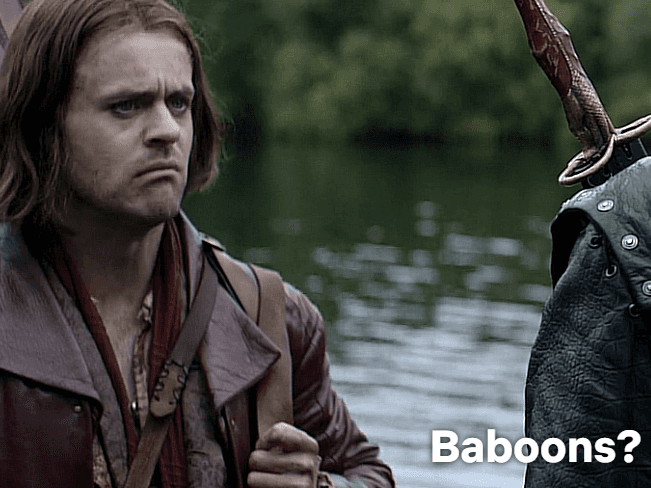
In the original Polish version of Baptism of Fire, Geralt meets peasants who warn him about “gorillas” ("goryle") attacking villages. Dandelion later realizes they meant guerrillas (gerylasi). In Polish, the joke is a little on the nose but lands perfectly: goryle sounds like gerylasi. It’s clever, earthy, and rooted in rural speech. It's a short, simple moment that shows Sapkowski’s ear for language and class.
In the English translation however, those “gorillas” somehow became baboons. The wordplay vanished, and the scene turned absurd. As if the peasants got confused about the species of the monkeys not the word 'guerillas'. And Netflix, relying on the English text, copied this straight into their adaptation.
A small slip, but one that speaks volumes. When the meaning of a joke evaporates, so does the world that produced it.
If only the gorillas could speak, they’d probably say that the true meaning got lost in the mist.
World of Words
Sapkowski’s writing thrives on the viscerality and simple poetry of his language.
His stories blend Slavic myth with modern irony. He writes in layers. Archaic phrasing next to street slang, folklore and legends beside scientific and philosophical musings ("monsters can be good, but people can be monsters too...").
Polish gives him a wide palette of tone and rhythm, and he uses it fully, if modestly.
That richness seems almost impossible to carry over directly.
Idioms like obiecanki-cacanki — a childish rhyme meaning “empty promises” — lose their sound and charm when turned into plain English.
Archaic verbs like chędożyć, which is a folksy, old-world way of saying to 'have sex' ("to tumble" in slang), which Sapkowski reimagined into a cheeky vulgarism, become bland modern "fuck".
Even something as simple as chram, a word for a pre-Christian Slavic temple, loses its resonance when replaced with “sanctuary.”
“Paskudny” consistently used for Geralt’s “ugly” stitches and smile, tying physical scars to emotional tone, is completely missed in English:
“Geralt … was watching the monster smiling, and it was a terrible smile.”
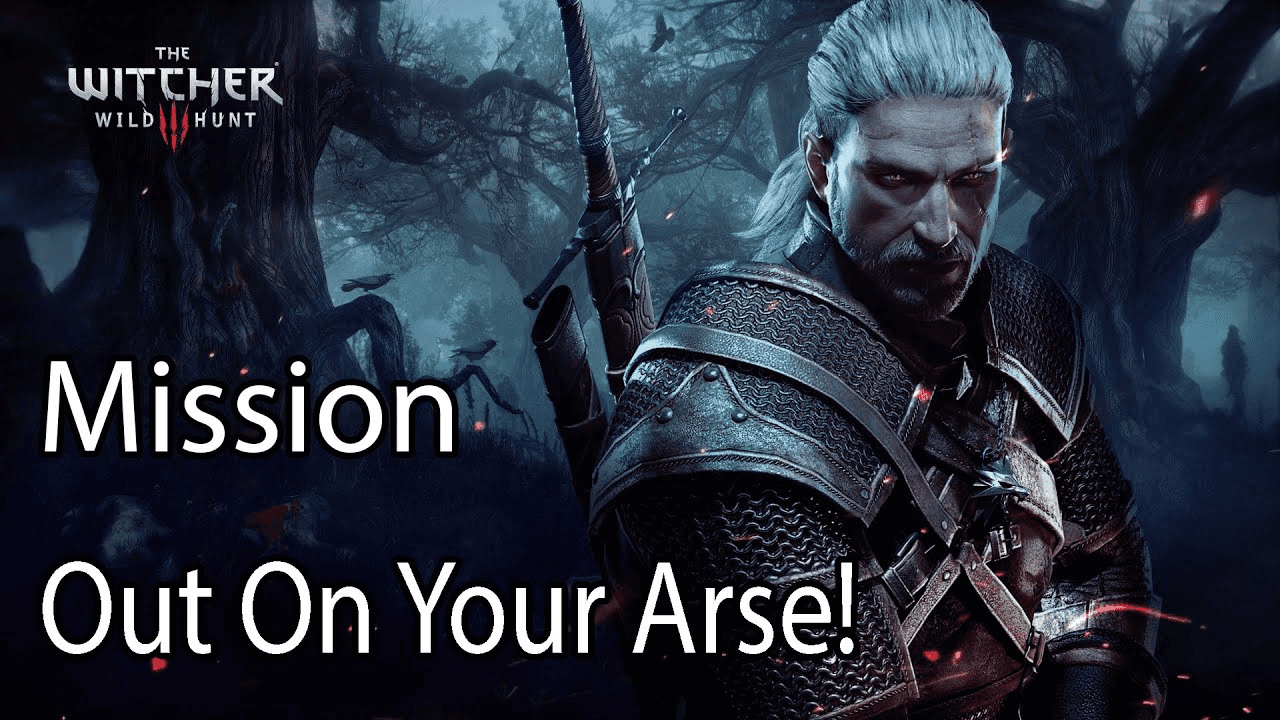
Sapkowski often uses “rzyć” for “arse.” It’s an archaic and sometimes dialectal term which he low-key restored to more common use.
Several puns and idiomatic jokes disappear entirely:
The kikimora/kociozmora pun meaning “nightmare for cats” is translated into 'felispectre', a neat choice but one that renders the word meaningless. Poor kitty got neutered.
Proverbs like “Bogu świeczkę, a diabłu ogarek” about satisfying both sides of a conflict (“a candle for God, a tallow one for the devil”) are erased or misrendered:
'They're bringing him offerings.' 'That's just it,' said the poet, indicating the candle. 'And they burn a tallow candle for the devil. …’
These are not minor details. They shape how his world feels. Sapkowski writes with a wink—his humor often depends on word rhythm, rhyme, and idiomatic turns. English translation often neutralizes these, turning playful prose into plain description.
His Polish draws from centuries of speech and belief. He also uses a lot of dated words and gives them new life ("chędożyć", "rzyć") that become so popular again, people actually use them in real life.
When those linguistic roots are trimmed away, what remains is just plain fantasy, stripped of the humor and identity that made it distinct.
Rhytm & Report
Sapkowski’s syntax also carries emotion. In Polish, his sentences can break and reform mid-thought.
“Geralt jumped. Jumped like a released spring.”
In English:
“Geralt jumped. Every move he made…”
The rhythm is gone. The pulse flattens. Polish version breathes tension. English reports it.
This difference runs through every page. Sapkowski’s Polish is compact, cinematic. There’s no filler. His most recent prequel Rozdroże Kruków (Crossroads of Ravens) feels even more tightly wound, every line is purposeful, there's no wasted nor surplus word.
Translators often stretch or soften sentences for clarity, but with Sapkowski, that very clarity becomes distortion. He writes for the ear AND heart, as much as the mind.
My friend and fellow dialogue writer said it best:
What matters the most is the approach to the original text. In adaptation, it is a basis, not an edict. Instead of literal meanings, what matters is to carefully examine and understand the creator's intention, and then accurately convey it to the target audience, using your own words, style, associations, and inspiration from the target language.
Above all, the text should evoke emotions. And all of the translator's decisions and tools must work to convey those emotions accurately. To achieve this, you need to be very open-minded, understand the language of the book/game/film, the psychology and characteristics of the characters, have a solid knowledge of the world around us, and be very sensitive to words, because they are like colors on a painter's palette. You can immediately hear when someone uses them with passion, creates something new with them, applies them appropriately to the needs and knows how to play with them, and when they treat them instrumentally, soullessly, mechanically or even mechanically...
—Alicja Roethel, polish dialogue writer
What the English World Lost
The English translations aren’t total failures; they’re functional. They tell the story clearly. But they replace a rich literary voice with a neutral one, if not neutered.
The result is a Sapkowski who sounds less like a Polish stylist and more like an average fantasy author. And because those English editions became the foundation for the Netflix series (and to much lesser extent games, but that's another story), the global Witcher phenomenon grew from a filtered version of his work.
There are significant challenges in translating idioms, cultural expressions, and humour, but there are ways to do that and they are integral to preserving the atmosphere and literal artistry of The Witcher saga.
With The Witcher's original language being Slavic-based Polish, there are bound to be some flaws in the translation to Germanic-based English.That said, the English translation of The Witcher is quite wooden and robotic, stripping out much of the wordplay and richness of Sapkowski's original Polish passages.
That explains why so many readers (as well as viewers) feel the adaptations are subpar. In a sense, they never could shine. The English Witcher doesn’t speak with Sapkowski’s voice. It speaks with plain words that never quite fit.
The Master and the Deaf Students
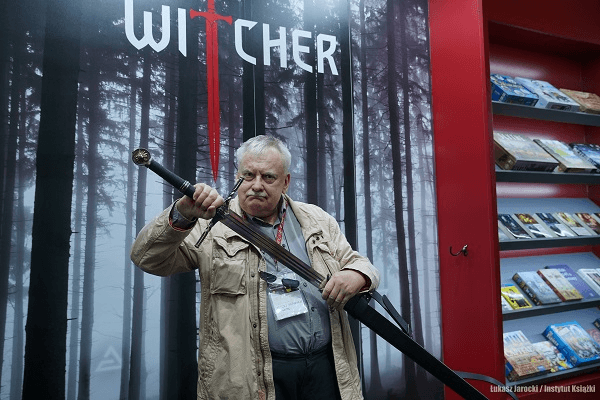
None of this is about blaming translators. Translating Sapkowski is notoriously hard. His writing lives in tone and context. In knowing how a peasant might twist a proverb or how to use long-forgotten old-world words to mock modern vices. Re-creating that in another language requires both literary skill, sensitivity to history and the world around us as well as deep cultural adapation.
But it’s also a reminder for publishers, studios, and readers: language carries emotions and identity. A story’s soul isn’t just in what happens, but in how it’s told. When that voice is lost, no amount of world-building or adaptation can bring it back.
Between goryle and baboons, between chędożyć and “have sex,” between rhythm and report, Sapkowski’s voice slipped through the cracks. What the world received was a faithful retelling, but not the true experience of his prose.
If we want to understand The Witcher as Sapkowski wrote it, we have to start where his world begins: with the language itself.
Tired of things getting lost in translations?
If you're looking for an Adaptation, Translation and Localization partner who cares and actively protects your titles's quality, send me a DM and let's talk about what I can do for you.